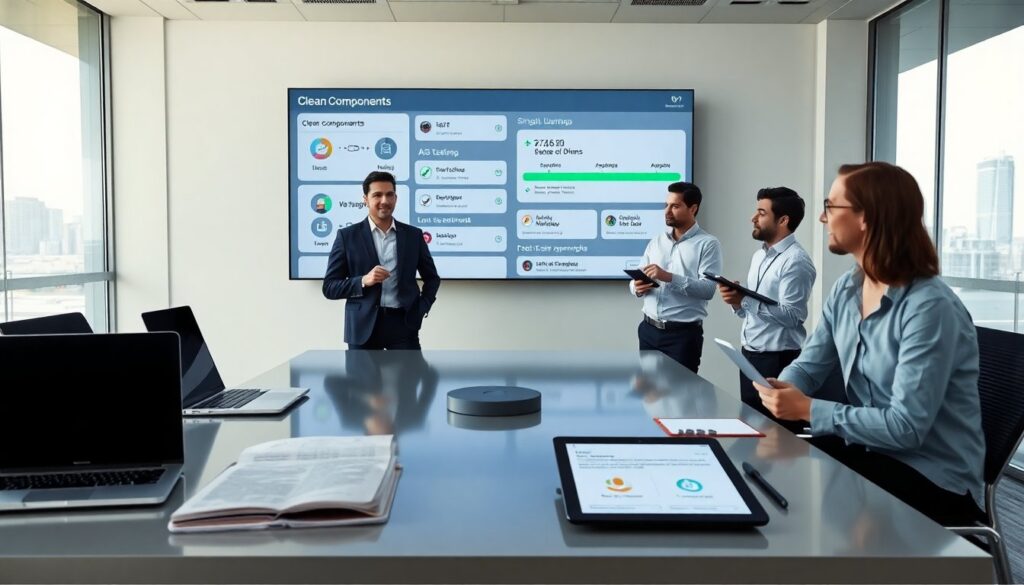
WizzyDigatl blends quarkux arcane development wizzydigatl into product work to create user-first interfaces. The team uses small experiments and clear metrics. They test features with users and measure behavior. They iterate fast and ship steady updates. This approach keeps users central and reduces wasted effort.
Key Takeaways
- WizzyDigatl integrates quarkux arcane development to design user-first interfaces by breaking UI into small, purposeful components.
- The team uses data-driven experiments and A/B testing to iterate quickly, ensuring features improve user tasks and retention.
- Quarkux arcane development speeds decision-making by linking design components to clear user outcomes and measurable goals.
- WizzyDigatl emphasizes cross-training designers, engineers, and product owners to share core skills and shorten idea validation cycles.
- Maintaining a documented component library and experiment archive supports consistent, efficient development and avoids repeated mistakes.
- The implementation roadmap follows a clear, user-focused process from prototype to production, with continuous monitoring and adaptation based on metrics.
What QuarkUX And Arcane Development Means For WizzyDigatl
WizzyDigatl defines quarkux arcane development wizzydigatl as a mix of minimal interface atoms and targeted engineering practices. The team splits UI into small components. Designers name each component for a single purpose. Engineers carry out each component with clear inputs and outputs. Product managers link components to user outcomes.
WizzyDigatl uses quarkux arcane development wizzydigatl to speed decision cycles. The team writes short tests that check user tasks. They deploy changes behind flags and gather metric data. They read metrics and user notes daily. They change designs when data shows friction.
WizzyDigatl treats quarkux arcane development wizzydigatl as a process that reduces risk. The team launches small experiments. They run A/B tests for two to four weeks. They measure success with task completion and retention. They stop features that harm metrics and keep features that help users.
WizzyDigatl trains staff in quarkux arcane development wizzydigatl routines. Designers learn code basics. Engineers learn usability basics. Product owners learn to write clear hypotheses. This shared skill set shortens the time from idea to validated result.
WizzyDigatl documents each step of quarkux arcane development wizzydigatl. They keep a component library with usage notes. They store experiment plans and outcomes. They archive lessons for future projects. This practice reduces repeated mistakes and spreads success.
Core Design Principles And UX Patterns To Deliver Delight
WizzyDigatl follows clear design principles that align with quarkux arcane development wizzydigatl. The first principle keeps interfaces simple. The team removes options that distract users. The second principle gives clear feedback. The interface tells users what happened after each action. The third principle reduces cognitive load. The team groups related actions and hides rarely used controls.
WizzyDigatl uses repeatable UX patterns that support quarkux arcane development wizzydigatl. They use progressive disclosure for advanced settings. They use inline validation to stop errors early. They use clear call-to-action buttons with precise labels. They arrange layouts to support common user tasks. They design patterns to work on mobile and desktop with the same logic.
WizzyDigatl measures delight with qualitative and quantitative signals that reflect quarkux arcane development wizzydigatl. They run short usability sessions and record task success. They track time-on-task, error rates, and completion rates. They monitor Net Promoter Score and feature-level satisfaction. They tie these measures to roadmap decisions.
WizzyDigatl prioritizes accessibility and performance. They test color contrast and keyboard navigation. They reduce bundle size and lazy-load noncritical resources. These steps make interfaces faster and usable for more people. This work supports quarkux arcane development wizzydigatl by reducing technical debt and user friction.
WizzyDigatl builds pattern libraries that reflect quarkux arcane development wizzydigatl. The library stores code snippets, visual examples, and guidance notes. Teams reuse components and extend them when needed. Reuse saves time and keeps the product consistent.
Implementation Roadmap: From Prototype To Production For WizzyDigatl
WizzyDigatl follows a clear roadmap that fits quarkux arcane development wizzydigatl. The roadmap starts with a problem statement and a measurable goal. Teams write a one-paragraph hypothesis. They sketch a low-fidelity prototype to show the core idea. They run a quick user test to confirm the flow.
The team then builds a high-fidelity prototype and a technical spike. Engineers estimate effort and note integration risks. Designers hand off component specs with states and edge cases. The team sets success metrics and selects tracking events.
WizzyDigatl develops the feature behind a feature flag. They deploy to a small percentage of users. They run experiments that compare the new flow to the baseline. They collect metrics and user feedback. They watch for regressions and accessibility issues.
If metrics validate the hypothesis, WizzyDigatl ramps rollout. They monitor performance and scale tests. They update documentation and the pattern library. They run a short post-launch review and capture lessons. They add follow-up experiments to refine the feature.
If metrics disprove the hypothesis, WizzyDigatl rolls the change back or iterates. They analyze failure points and form new hypotheses. They keep the learning and apply it to future work. This cycle keeps quarkux arcane development wizzydigatl efficient and focused on user value.
WizzyDigatl schedules regular maintenance for components created through quarkux arcane development wizzydigatl. Teams remove unused components and fix small defects. They refactor code to lower complexity. This maintenance keeps the system healthy and reduces future rework.