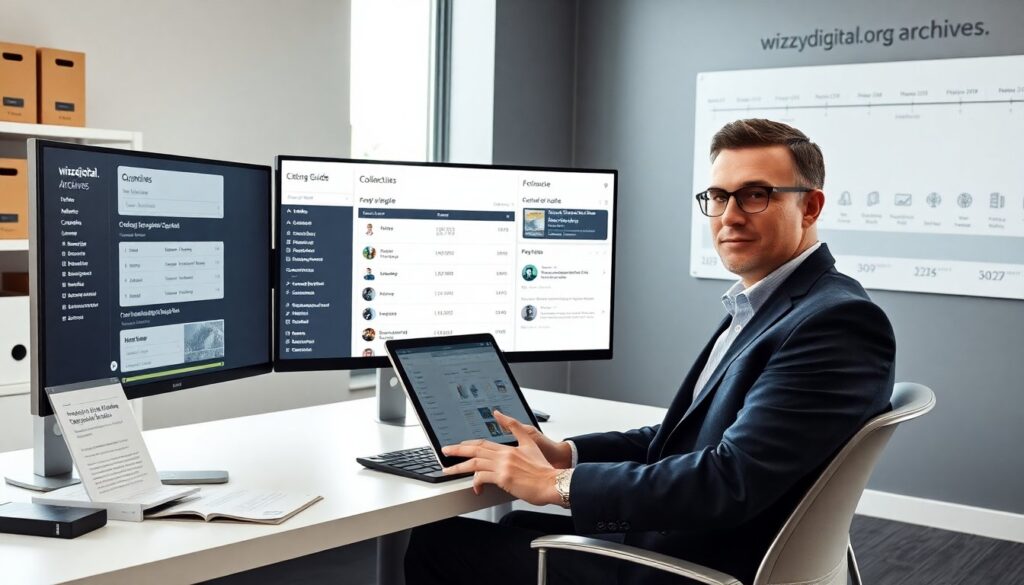
WizzyDigital.org archives hold historic web pages, articles, and media. The researcher visits the archive to find content for study, reuse, or personal interest. The archive stores original files and snapshots. The user reads records, inspects metadata, and notes dates. This guide explains what the wizzydigital.org archives hold and how the user can search, cite, and preserve items.
Key Takeaways
- The wizzydigital.org archives contain diverse content types including articles, images, PDFs, audio, and HTML snapshots, all organized by date and thematic collections.
- Users can efficiently search and filter the archives by keywords, file types, date ranges, and collections, with access to detailed metadata for each item.
- To responsibly reuse content, users should verify metadata, check copyright status, and properly cite archived materials including the original URL and capture date.
- Downloading options include direct file downloads and full-page HTML packages, with recommendations to save metadata and use stable file naming for long-term preservation.
- Sharing archived content is encouraged through proper citation, linking back to wizzydigital.org, and using provided embed codes when available.
What The WizzyDigital.org Archives Contain
Types Of Content And Formats
The wizzydigital.org archives include text articles, blog posts, images, PDFs, and downloadable audio. The system also stores HTML snapshots and linked resources. Each item appears with a file type label and size. The archivist tags items by format. The user can preview images and read plain text. The archive keeps original file names when possible.
Date Ranges, Collections, And Notable Series
The wizzydigital.org archives cover content from early site launches to recent updates. The system groups items by year and by thematic collections. The archive highlights notable series and long-running columns. The user can filter by collection name or by year range. The archive records the original publication date and the archive capture date.
How To Search, Filter, And Navigate The Archives
The visitor lands on the archive index and uses the search box. The search accepts keywords, exact phrases, and author names. The user applies filters for file type, year, and collection. The archive shows results sorted by relevance or date. The visitor opens an item to view a preview pane and metadata. The metadata lists title, author, original URL, and capture date. The user follows internal links to related items. The archive supports advanced search operators and simple boolean queries. The visitor bookmarks result pages or copies direct item links for later reference.
Best Practices For Using Archived Material
Users should verify the archive metadata before reuse. The researcher checks the original capture date and the source URL. The user reads any included usage notes or license flags. The archivist recommends saving a local copy of important items. The user avoids relying on a single archived snapshot for legal or academic claims. The researcher cross-checks the archived version with other sources. The user notes context, such as site structure or linked resources, when they quote or excerpt content.
Citing, Copyright, And Attribution
The user cites the wizzydigital.org archives by listing the archived title, original URL, capture date, and archive access date. The citation format varies by style guide, but the core fields remain the same. The user checks copyright status for each item. The archive marks some items with explicit licenses. The researcher requests permission when the license is unclear. The user includes attribution lines and links when they reuse images or text. The archive records help prove provenance for claims and permissions.
How To Download, Preserve, And Share Archive Content
The user downloads items via the archive download controls. The archive offers direct file downloads and full-page HTML packages. The user saves metadata files alongside each download. The archivist suggests using stable file names and a clear folder structure. The user creates checksums to verify file integrity over time. The archive supports bulk export for entire collections in standard formats. The researcher stores exported files on local drives and on one or two cloud services. The user shares content by linking back to the wizzydigital.org archives and by including citation details. The archive also provides embed codes for images and media when allowed.