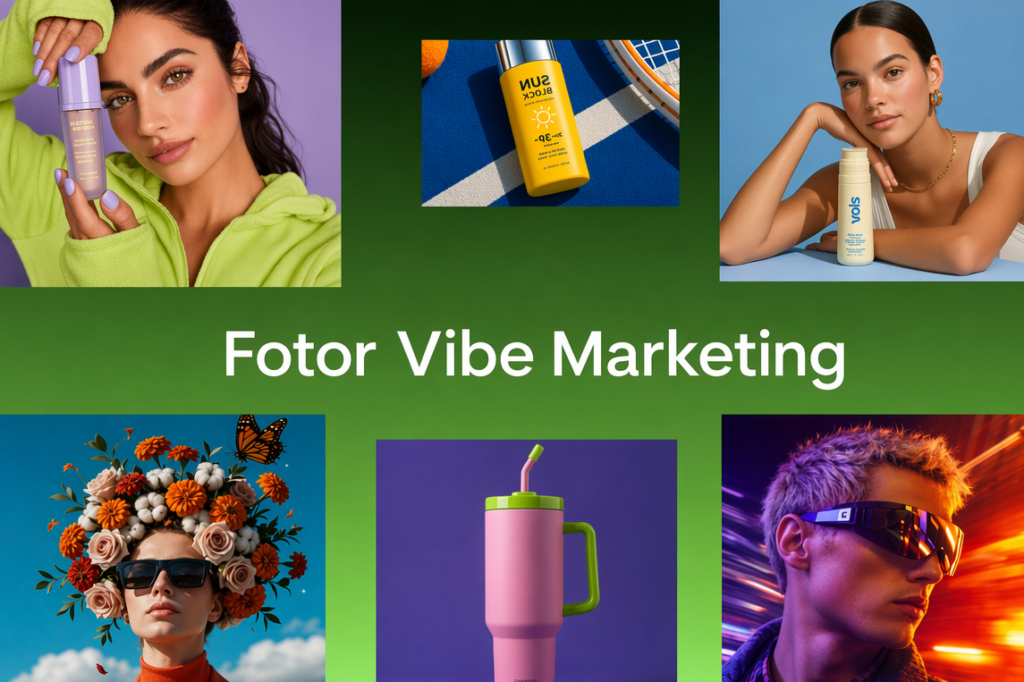
In today’s digital landscape, visual content has become one of the most critical drivers of brand growth. From paid advertising to social media campaigns and e-commerce listings, brands are expected to produce more high-quality visuals than ever before, faster, more frequently, and across more channels.
However, as demand scales, traditional visual production workflows are struggling to keep up.
Design teams, creative agencies, and production studios often rely on fragmented tools and manual processes that require significant time and budget. Each new campaign typically involves multiple steps, including concept development, design execution, asset adaptation, and post-production, creating bottlenecks that slow iteration and increase costs.
For many small and mid-sized businesses, this has created a structural challenge: scaling visual marketing often means sacrificing either speed, cost efficiency, or creative consistency.
This is the problem Fotor aims to address with its Fotor AI Vibe Marketing Platform, an AI-powered solution designed to help brands transform creative ideas into scalable visual marketing systems.
Introducing Fotor Vibe Marketing: From Idea to Visual System
Fotor’s Vibe Marketing framework redefines how visual content is created and scaled by connecting creative direction directly to production tools.
Instead of producing assets one by one, teams begin with a single creative input, a“vibe,”and use Fotor’s Vibe Marketing AI tools to expand it into a complete visual system.
For example, a fashion e-commerce store launching a “clean urban streetwear” campaign would traditionally rely on model hiring, studio booking, and post-production workflows. Production costs often range from several thousand to over $10,000 per shoot, with timelines stretching 7 to 14 days before final assets are ready.
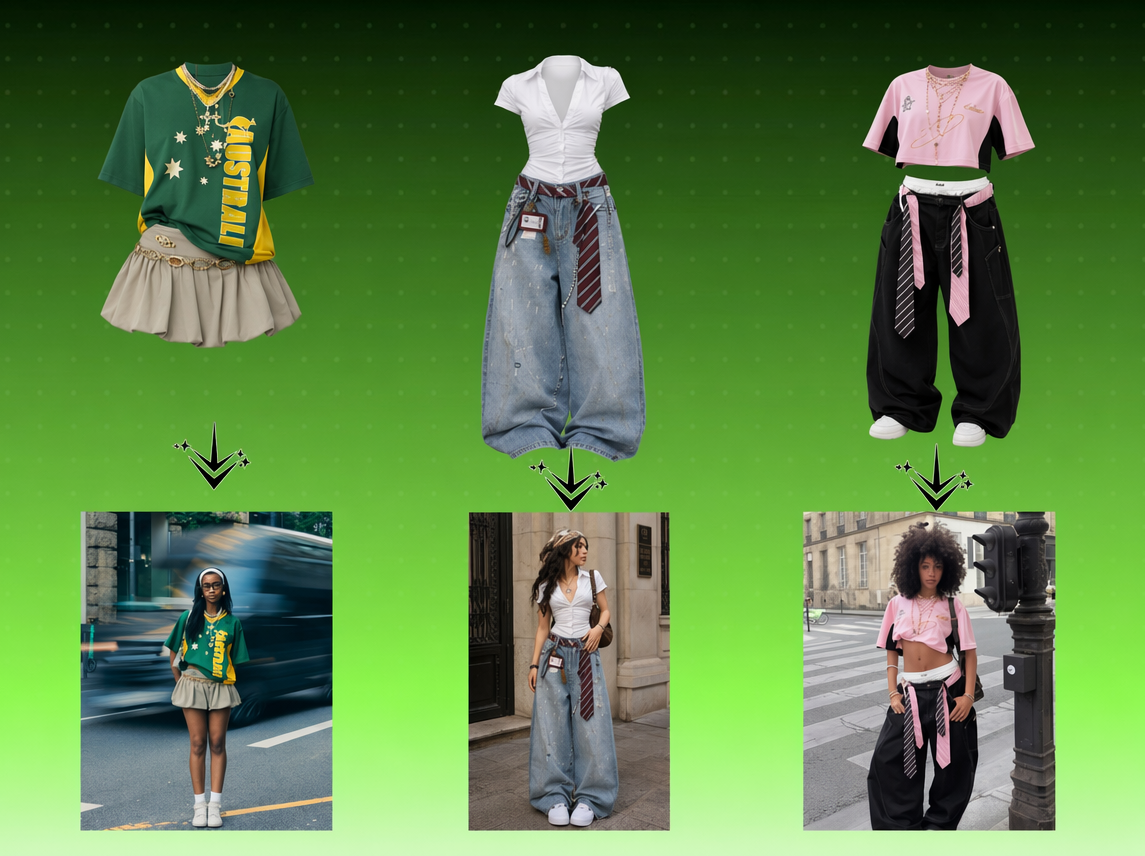
With Fotor’s Vibe Marketing Platform, the entire workflow shifts to AI. Using the Virtual Model feature, the team generates fashion-ready visuals instantly, without physical shoots or external production teams. Other AI tools like AI Multi-Scene Showcase, Smart Listing, are used to refine scenes and maintain a consistent campaign aesthetic.
The result is a compressed production cycle that drops from days or weeks to hours. Costs are significantly reduced, while teams can produce multiple creative variations in a single workflow, enabling faster testing and iteration at scale. Within a single workflow, one creative direction is transformed into a full set of campaign-ready assets, including product images, lifestyle compositions, and platform-specific creatives.
This shifts the workflow from fragmented execution across multiple production stages to a unified system where Fotor’s Vibe Marketing Platform handles generation, refinement, and scaling in one place.
ROI Impact: Lower Production Costs and Faster Creative Iteration
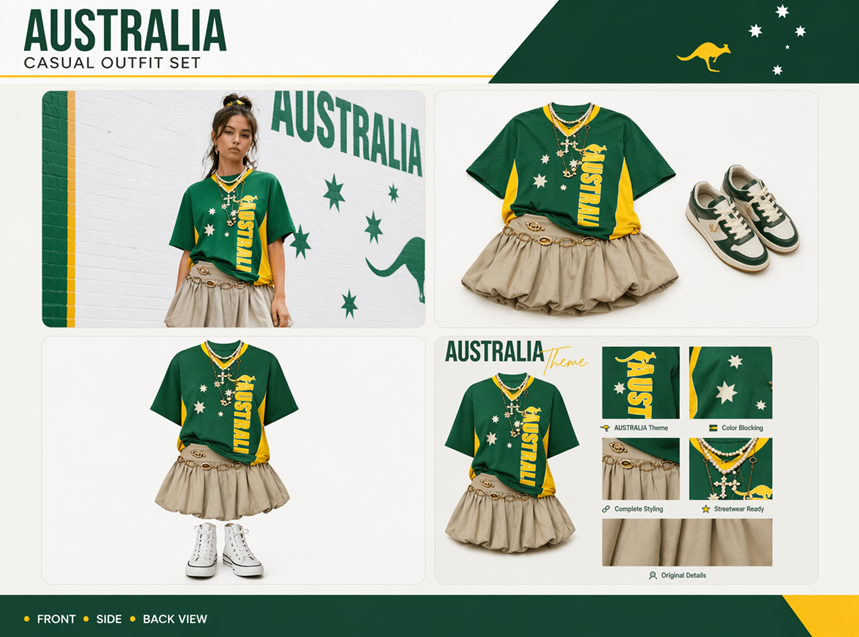
Fotor’s AI tools within the Vibe Marketing Platform deliver measurable improvements in marketing efficiency and ROI.
In the case of the fashion e-commerce store, what previously required separate photo shoots, model coordination, studio scheduling, and post-production editing is now handled entirely within Fotor’s Vibe Marketing Platform. Using Virtual Model, UGC Avatar, AI editing tools, and product creative templates inspired by high-performing ad formats, the team can generate multiple campaign-ready visual variations directly from a single product input, including lifestyle visuals, user-generated style videos, and ad creatives based on proven winning patterns, eliminating most external production dependencies.
As a result, production costs are significantly reduced, while the time required to create and launch new campaign visuals is dramatically shortened. Assets that once took days or even weeks to produce can now be generated, refined, and adapted within a much shorter iteration cycle.
This also enables faster creative experimentation. The team can quickly test multiple visual directions, run A/B comparisons across different styles, and optimize campaign performance based on real-time feedback.
Overall, this closed-loop workflow leads to lower cost per asset, higher output volume, and faster iteration speed, resulting in substantially improved marketing ROI, especially for brands that need to scale visual content across multiple channels and campaigns.
From Creative Output to a Growth Engine
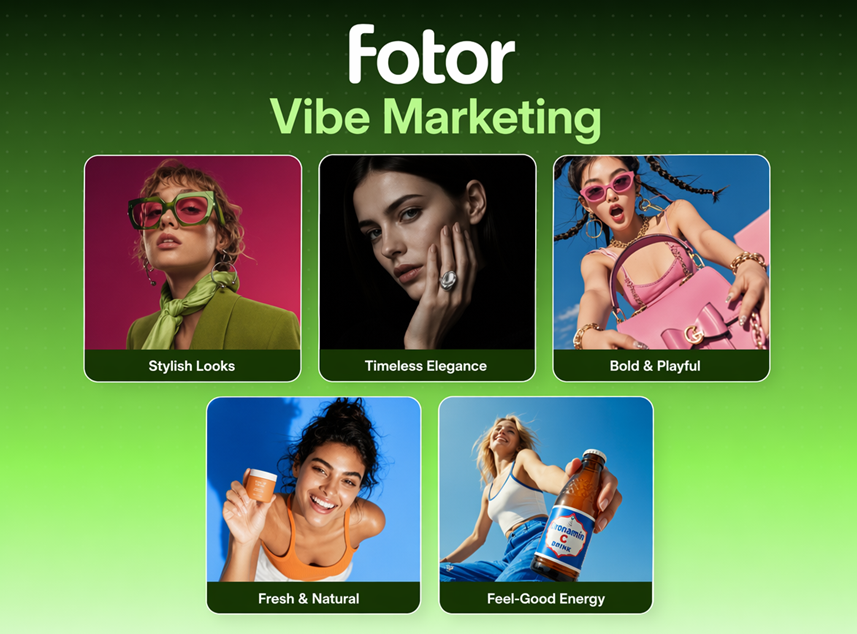
Beyond efficiency gains, Fotor’s Vibe Marketing approach represents a broader shift in how visual content is used within modern marketing organizations.
Traditionally, visual assets have been treated as static outputs, individual deliverables created for specific campaigns or platforms. Once produced, they often remain unchanged and limited in application.
Fotor reframes this model by turning visual content into a dynamic, performance-driven asset.
Each generated visual can be rapidly adapted for different audiences, formats, and campaign objectives. This flexibility allows marketing teams to continuously refine and optimize creatives based on performance data and channel requirements.
In this system, creativity is no longer a one-time production effort, but an ongoing process of iteration and improvement.
Marketing teams can to test more ideas, validate concepts faster, and scale successful visuals across multiple touchpoints without restarting the production process from scratch.
As a result, visual marketing becomes more than content creation, it becomes a growth engine that continuously feeds performance and business outcomes.
Conclusion
As brands continue to face increasing pressure to produce more content with fewer resources, traditional visual production models are reaching their limits.
Fotor’s Vibe Marketing approach offers a new alternative, one that replaces fragmented workflows with a unified, AI-driven system for scalable visual creation.
By transforming a simple creative direction into a fully operational visual system, Fotor enables teams to reduce production costs, accelerate iteration cycles, and improve overall marketing efficiency.
In doing so, it redefines not just how visual content is created, but how it contributes to growth.