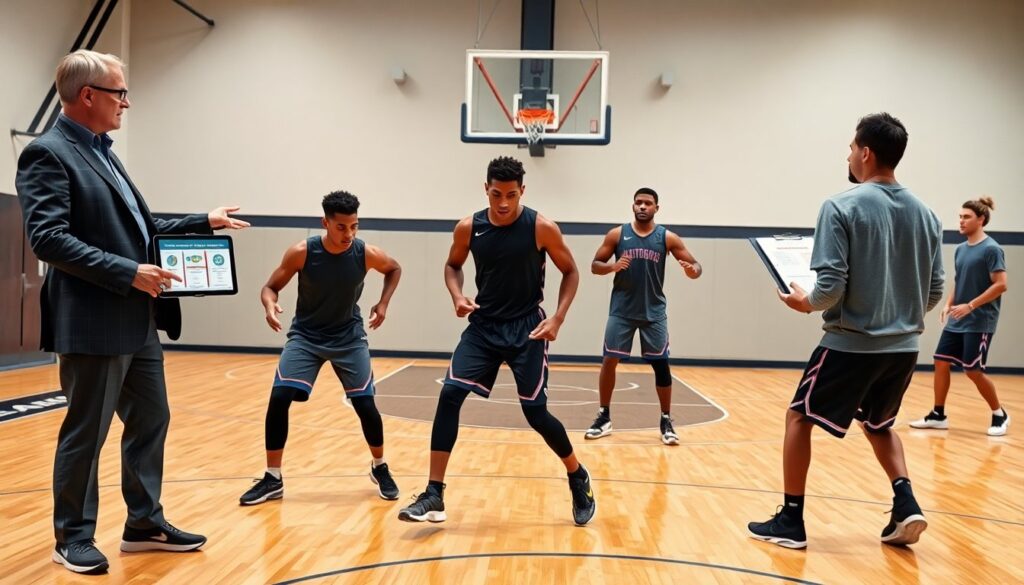
wizzydigital basketball dynamic nature offense constantly stretches defenses in clear, repeatable ways. The playbook shows spacing, timing, and reads that force defense shifts. The team runs patterns that create lanes and open shots. Coaches use simple rules to guide player choices. Players act with clear roles. The result: defenses move and gaps appear more often.
Key Takeaways
- WizzyDigital basketball offense leverages dynamic spacing and timing to consistently stretch defenses and create open shots.
- Players follow clear roles and read defender movements to make quick, high-value decisions that force defensive shifts.
- Constant off-ball movement and intelligent screening actions drag defenders out of position and exploit mismatches effectively.
- Coaches emphasize simple rules like ‘space, read, attack’ during practice to enhance decision-making and maintain offensive flow.
- Success is measured with metrics such as open three attempts and points per possession, guiding in-game adjustments to sustain defensive pressure.
- The offense balances pace and shot selection to keep defenders off balance, maximizing opportunities in both set plays and transition.
Core Principles: Spacing, Pace, And Read-Based Decision Making
WizzyDigital’s offense uses spacing to create choices for the ballhandler and cutters. The system places shooters wide and keeps two players ready to cut. The offense sets pace to force defensive resets and to find advantage in transition. Players read defender chest, shoulder, and foot position to pick the correct action. The read-based decisions follow strict triggers: a drop step becomes a drive, a late closeout becomes a kick, a heavy hedge becomes a slip. Coaches repeat these triggers in practice so players react the same under pressure. The offense balances shot value by placing high-efficiency options near the rim and behind the arc. The team varies pace to keep defenders off balance and to widen defensive spacing. This pattern helps the offense stretch a set defense and also punish mismatches in transition. The playbook emphasizes one-screen reads, two-screen chains, and stagger spacing to keep help defenders occupied. The offense prioritizes open shots and simple passes. Each possession seeks to move a defender one step away from his mark. That small step creates driving lanes and open catch-and-shoot attempts. The system asks players to act with clear intent and to accept high-value shots when they appear.
Player Roles And Actions That Force Defensive Adjustments
WizzyDigital assigns clear roles to support spacing and reads. A primary ballhandler probes the defense and reads weak-side rotations. Two shooters stay ready on the wings to punish closeouts. A rim runner sets screens and fills lanes. A secondary playmaker relocates to create second passes. These roles force defenses to choose between helping early or staying attached. When defenders help, shooters see open looks. When defenders stay attached, drivers reach the rim. The offense asks players to make simple choices: attack a close defender, hit the open man, or set a strong screen. Each role includes specific actions on common coverages. For example, on drop coverage the rim runner slips and the perimeter shooter steps out. On switch coverage the ballhandler fights to find the smaller defender. On heavy trap the secondary playmaker spaces to the corner. These actions force adjustments by defenders. The offense then exploits those adjustments with quick reads and decisive passes. This method creates repeatable advantages and forces defenses into reactive mode.
Off-Ball Movement, Screening Actions, And Exploiting Mismatches
Off-ball movement keeps defenders occupied and stretches help. WizzyDigital runs constant off-ball cuts to drag help away from the paint. Players use back screens, flare screens, and stagger screens to create separation. The offense times screens to arrive just as the ballhandler attacks. This timing forces defenders to choose hard decisions in split seconds. Screening actions include target screens that free shooters and slip screens that hit the rim early. The team looks for mismatches after a switch. Guards post up smaller defenders and forwards attack slower defenders. The offense uses quick passes to exploit those mismatches before help arrives. Players read matchups and act on a single prompt: find the open advantage and attack it. This direct focus on read and action increases shot quality and stretches the defense across the floor.
Coaching Strategies, Practice Drills, And Play Design To Sustain The Stretch
Coaches teach rules that simplify choices and speed execution. They keep language short: ‘‘space, read, attack.” They run drills that mimic game pressure and reinforce reads. Drills include 5-on-5 live spacing, rapid-fire catch-and-shoot reps, and read-driven two-on-one decisions. Coaches add constraints that force spacing, such as limiting post touches or rewarding quick kicks. They film short clips to show clear cues and to isolate repeatable errors. Practice focuses on timing of screens and on-ball footwork for drives. Coaches design plays that fold basic actions into multiple options so players can read rather than memorize long sequences. They test plays in scrimmages and keep the most reliable ones. Coaching also includes player-specific adjustments. They adjust roles to match roster strengths and to expose opponent weaknesses. This process keeps the offense practical and able to stretch defenses across multiple games and lineups. Coaches review metrics after each game and refine practice plans to reinforce winning patterns.
Measuring Success: Metrics, Film Cues, And In-Game Adjustments
Coaches measure how often the offense creates spacing and high-value shots. They track open three attempts, attempts at the rim, and paint touches per possession. They monitor assist-to-turnover ratio and points per possession. Film cues include late closeouts, scrambling help, and mismatched switches. Coaches mark those cues and link them to successful plays. In game, coaches change pace or personnel to force different defensive reactions. They run quick sets to test an opponent’s drop coverage and add shooters if help collapses. They call timeout plays that isolate a mismatch or create a quick corner three. Coaches also use substitution patterns to keep key spacers on the floor together. These adjustments aim to increase open attempts and to keep defenders moving. Staff repeat metric reviews weekly and adjust practice to fix weak spots. The data and film guide small in-game changes that maintain the offense’s ability to stretch defenses.